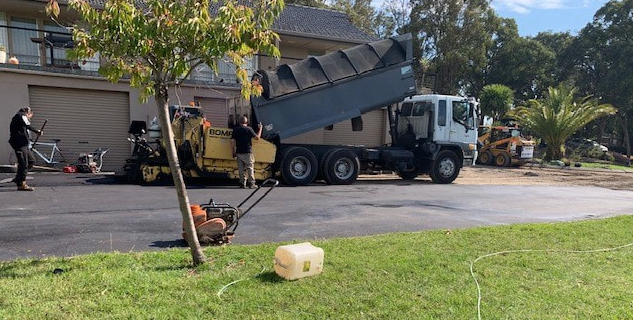
Choosing the right surfacing material is about more than creating a neat finished appearance. Roads, driveways, access areas, car parks and hardstands must cope with repeated vehicle movements, changing weather conditions and the stresses created by everyday use. The pavement needs to remain stable, practical and maintainable over the long term.
Asphalt continues to be a leading choice because it combines strength, flexibility and versatility within a surface that can be designed for different traffic requirements. At Bathurst Road Tek, we provide professional asphalt and bitumen surfacing services throughout Bathurst, NSW, with careful attention to the preparation and construction that ultimately determine how well a pavement performs.
What Makes Asphalt Such a Versatile Surfacing Material?
One of asphalt’s greatest advantages is that it can be used across many different types of pavement.
Common applications include:
- Residential driveways
- Private roads
- Commercial access areas
- Car parks
- Hardstands
- Industrial yards
- Vehicle turning and parking areas
However, the asphalt used at the surface is only one part of the pavement. Long-term durability depends on matching the complete pavement structure to its intended use.
A lightly trafficked driveway and a hardstand regularly supporting heavy vehicles place very different demands on the layers beneath them. Professional pavement construction takes these differences into account.
Asphalt Combines Strength with Flexibility
Asphalt is a flexible pavement material, which is one reason it performs effectively under vehicle traffic.
Rather than behaving as a completely rigid surface, asphalt has a degree of flexibility that allows the pavement to accommodate normal stresses associated with traffic and environmental conditions.
This does not mean asphalt is unaffected by movement. Excessive foundation movement can still result in cracking or deformation. However, when installed over a properly prepared and compacted base, asphalt provides a strong and adaptable wearing surface for everyday use.
A Smooth Surface Supports Reliable Vehicle Access
Surface consistency is an important part of pavement performance.
Professionally laid asphalt creates a relatively smooth driving surface that supports predictable vehicle movement. This is valuable across residential, commercial and industrial properties where reliable access is required every day.
A consistent asphalt surface can provide:
- Comfortable vehicle movement
- Stable access
- Reduced surface vibration
- Predictable manoeuvring
- A neat and uniform finish
These characteristics help explain why asphalt is used for everything from individual driveways to larger traffic areas.
The Foundation Determines Long-Term Performance
Durable asphalt starts beneath the visible surface.
The pavement foundation must support vehicle loads and distribute them through the underlying layers. If this support is inconsistent, the asphalt above can eventually develop depressions, cracking, rutting or other forms of deterioration.
Quality preparation may involve:
- Assessing existing ground conditions
- Preparing the subgrade
- Installing appropriate base materials
- Establishing the correct pavement levels
- Compacting materials thoroughly
- Preparing for effective drainage
Skipping or reducing the quality of these stages can compromise the performance of even a well-laid asphalt surface.
Proper Compaction Creates a Stronger Pavement
Compaction is critical throughout pavement construction.
Base materials need to be sufficiently compacted to create stable support, while the asphalt itself must also be compacted correctly during installation.
Appropriate compaction helps reduce unnecessary movement and creates a dense, consistent pavement capable of supporting regular traffic.
Poorly compacted areas can become weak points where deformation and deterioration develop earlier than expected.
Asphalt Can Be Designed Around Traffic Demands
Not every pavement experiences the same type of loading.
A residential driveway may primarily accommodate passenger vehicles, while a commercial or industrial area could regularly carry delivery vehicles, machinery or other heavy traffic.
Professional asphalt construction considers:
- Vehicle types
- Traffic frequency
- Expected loads
- Turning movements
- Parking locations
- Areas exposed to repeated braking or acceleration
These factors influence how the pavement should be prepared and constructed.
Designing around actual use is far more effective than treating every asphalt project as though it has identical requirements.
Drainage Plays a Major Role in Asphalt Durability
Water management is fundamental to pavement longevity.
When water repeatedly collects on asphalt or penetrates through cracks and damaged sections, it can affect the supporting materials underneath. A weakened foundation provides less consistent support, increasing the likelihood of movement and surface deterioration.
Professional pavement preparation therefore considers how rainfall will leave the surface.
Correct grading helps direct water away from traffic areas and reduces the formation of persistent low spots.
Protecting asphalt from unnecessary moisture exposure is one of the most important ways of supporting long-term performance.
Asphalt Provides a Durable Surface for Driveways
A driveway needs to cope with more than vehicles simply travelling in a straight line.
Entrances, parking positions and turning areas can experience concentrated stresses as vehicles brake, accelerate and manoeuvre. The pavement therefore needs appropriate support throughout these frequently used sections.
When professionally constructed, asphalt provides a smooth, stable surface that suits the demands of everyday driveway use.
It also creates a defined and consistent entrance that can improve the overall presentation of the property.
Commercial Surfaces Need Consistent Performance
Commercial access areas and car parks often experience frequent traffic throughout the day.
Staff, customers, visitors and service vehicles may repeatedly use the same entrances, turning points and parking areas. These traffic patterns can place greater stress on particular sections of pavement.
A properly designed asphalt surface can provide the durability required for these environments while supporting straightforward vehicle movement and a professional-looking finish.
Asphalt Can Perform in Demanding Hardstand Applications
Hardstands and industrial surfaces can face significantly heavier loads than standard driveways.
Heavy vehicles, equipment and repeated loading can create substantial stresses within the pavement. For these applications, the strength of the base and overall pavement design becomes particularly important.
Asphalt can be highly effective for hardstands when the entire pavement is constructed around the expected operational demands.
The objective is not simply to make the asphalt thicker, but to ensure every layer works together to support the loads placed upon it.
Maintenance Can Extend the Useful Life of Asphalt
Another reason asphalt remains widely used is that it can be maintained as it ages.
Pavement deterioration usually develops progressively. Identifying early defects provides an opportunity to address them before they affect larger sections.
Property owners should watch for:
- Fine cracking
- Loose aggregate
- Developing potholes
- Edge deterioration
- Depressions
- Areas holding water
- Increasing surface roughness
Localised repairs may be appropriate where deterioration remains limited, while resurfacing can provide a broader solution when the surface has become generally worn but the underlying pavement remains suitable.
Resurfacing Can Renew an Ageing Asphalt Surface
An older asphalt pavement does not necessarily require complete reconstruction simply because its surface is showing wear.
Where the supporting structure remains sound, asphalt resurfacing can create a renewed wearing layer across the existing pavement. Existing defects must first be assessed and appropriately prepared before new asphalt is applied.
Resurfacing can restore:
- Surface consistency
- Driving quality
- Pavement texture
- Overall presentation
- Everyday functionality
Selecting resurfacing at the appropriate stage can help preserve a pavement before deterioration progresses into deeper structural layers.
Why Professional Installation Is So Important
Asphalt itself cannot compensate for poor preparation.
A durable pavement is the result of several construction stages working together, from site assessment and grading through to base preparation, asphalt placement and compaction.
At Bathurst Road Tek, we assess asphalt and bitumen surfacing projects throughout Bathurst, NSW according to site conditions and intended use. This allows the pavement to be prepared and surfaced around the demands it will actually experience rather than relying on a one-size-fits-all approach.
Professional workmanship at the beginning also provides a stronger foundation for effective maintenance throughout the life of the surface.
Conclusion
Asphalt remains a leading choice for durable surfaces because it combines strength, flexibility, smooth vehicle access and versatility across residential, commercial and heavier-duty applications. It can also be repaired and resurfaced as it ages, helping property owners maintain pavement performance over the long term.
However, durable asphalt is not created by the surface material alone. Proper ground preparation, a stable base, effective drainage, appropriate compaction and construction suited to expected traffic are all essential.
For property owners and businesses in Bathurst, NSW, Bathurst Road Tek provides professional asphalt and bitumen surfacing solutions tailored to the requirements of each site. If you are considering a new surface or need advice about an existing pavement, our experienced team can assess the area and recommend an appropriate approach focused on dependable, long-term performance.
Call us on: 02 5301 9087
Click here to find out more about Bathurst Road Tek
Click here to complete our contact form and see how we can help with your asphalt and bitumen surfacing needs.