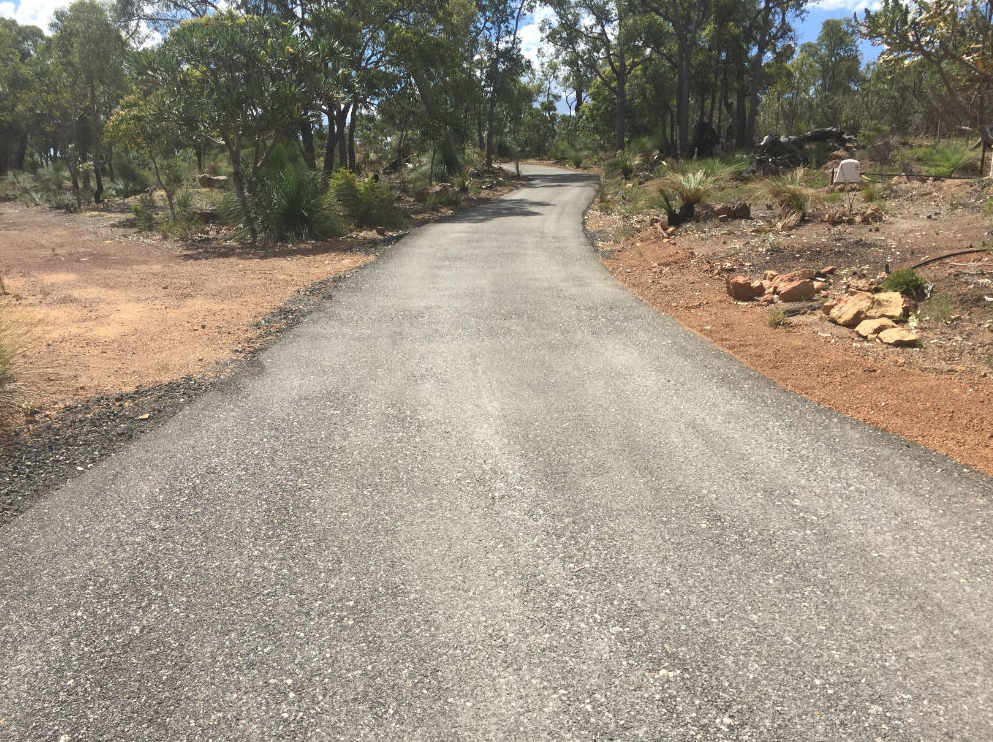
An asphalt surface that has been maintained for many years can eventually become a patchwork of pothole repairs, crack treatments and replaced sections. Some repairs may still be performing well, while others may have started cracking, sinking or separating from the surrounding pavement. When this happens across a driveway, access road, parking area or other asphalt surface, it is reasonable to ask whether continuing with individual repairs still makes sense.
In many cases, asphalt resurfacing can restore a pavement covered in old repairs, provided the existing structure underneath remains sufficiently stable. The important issue is not how many patches are visible. It is why those repairs were originally required, how they are performing now and whether the pavement can provide reliable support for a new asphalt layer.
For property owners and businesses in Bathurst, NSW, a professional pavement assessment can establish whether resurfacing is suitable or whether particular sections require deeper repair beforehand.
What Does a Heavily Patched Asphalt Surface Tell You?
Numerous patches do not automatically mean that an asphalt pavement has reached the end of its useful condition.
Individual defects can develop at different times throughout the life of a pavement. Potholes may have been repaired, damaged edges reinstated and localised failures removed and replaced.
Over many years, these repairs can create an inconsistent appearance even though much of the underlying pavement remains serviceable.
However, extensive patching can also indicate progressive deterioration.
Before resurfacing, it is important to establish whether the old repairs represent a collection of isolated historical defects or an ongoing pavement problem.
Resurfacing Is More Than Covering the Old Repairs
Asphalt resurfacing involves installing a renewed wearing surface over suitable existing pavement.
It should not be viewed as simply placing new asphalt over every crack, patch and pothole.
If unstable defects are covered without preparation, the movement responsible for those defects can continue underneath the new surface. Eventually, cracking, settlement or deformation may become visible again.
Professional resurfacing therefore begins with assessing and preparing what will remain underneath.
The condition of the existing pavement has a major influence on the performance of the renewed surface.
Stable Old Repairs May Not Be a Problem
Some patches can remain stable for many years.
If a repaired area is firm, reasonably level and well integrated with the surrounding pavement, it may continue providing suitable support beneath a resurfaced layer.
The existence of a patch alone is therefore not necessarily a reason to remove it.
Instead, contractors should consider:
- Whether the patch is moving
- Whether cracks have developed around its edges
- Whether the repaired area has sunk
- Whether the surface is breaking apart
- Whether another pothole has formed nearby
- Whether water regularly collects around it
Stable repairs and failing repairs need to be treated differently.
Failed Patches Should Be Addressed Before Resurfacing
A repair that is already deteriorating should not simply disappear underneath new asphalt.
Cracking around the perimeter of a patch can indicate movement or separation. Settlement can suggest inadequate support underneath, while loose material may show that the repair itself is breaking down.
Where an old patch is unsuitable, the affected section may need to be removed and repaired before the broader pavement is resurfaced.
This preparation helps create more consistent support for the renewed asphalt.
Look at the Pavement Between the Repairs
The condition of the original pavement between patches can provide important information.
If these areas remain relatively stable, the pavement may still have substantial serviceable structure remaining.
If deterioration has spread throughout the areas between repairs, the situation may be different.
Signs of broader deterioration include:
- Widespread cracking
- Loose aggregate
- Surface ravelling
- Multiple developing potholes
- Wheel rutting
- Depressions
- Significant edge breakup
- General pavement deformation
Where these conditions are extensive, the pavement requires closer assessment before resurfacing is recommended.
Why Did the Original Repairs Become Necessary?
Understanding the history of a patched surface can help identify what is happening now.
A pothole caused by a single localised weakness represents a different problem from repeated potholes caused by poor drainage or an unstable pavement base.
If repairs have repeatedly been required in the same sections, there may be an underlying cause that has never been fully corrected.
Possible causes include:
- Water penetration
- Weak supporting pavement
- Localised settlement
- Inadequate drainage
- Repeated heavy vehicle loading
- Movement within the pavement base
Finding these patterns before resurfacing can prevent existing weaknesses from simply being hidden underneath the renewed surface.
Repeated Repairs in One Area Deserve Particular Attention
A section that has been repaired several times can provide an important warning.
For example, if a pothole has been repaired and then another pothole develops immediately beside it, the problem may extend beyond the original cavity.
Similarly, if a patch continually sinks or cracks, movement may be occurring in the supporting pavement.
Resurfacing alone cannot stabilise a seriously weakened foundation.
These areas may require deeper localised repair so that the underlying cause is addressed before new asphalt is installed.
The Pavement Base Is Critical
Asphalt forms the visible wearing surface, but the pavement underneath provides much of the structural support.
A properly constructed and compacted base helps distribute vehicle loads. If the base remains stable, an ageing and heavily repaired asphalt surface may still be suitable for resurfacing.
If the supporting layers have deteriorated significantly, however, the situation changes.
Possible signs of base instability include:
- Deep rutting
- Significant settlement
- Soft pavement sections
- Extensive interconnected cracking
- Repeated pothole formation
- Large areas of deformation
Where structural problems are widespread, more substantial pavement rehabilitation may be required.
Cracks Need to Be Assessed Before Resurfacing
Old repairs are often accompanied by cracking.
Some cracks may be relatively minor and suitable for treatment during resurfacing preparation. Others can indicate more significant movement.
Cracks deserve closer investigation when they are:
- Widespread
- Interconnected
- Developing around failed patches
- Associated with rutting
- Located around depressions
- Continually reappearing after previous repairs
Installing new asphalt over active pavement movement can allow defects to eventually affect the renewed surface.
The cause and extent of cracking should therefore be understood before resurfacing begins.
Drainage Problems Can Explain Repeated Failures
Water is frequently involved in asphalt deterioration.
A pavement covered in old repairs should be examined to determine whether those repairs are concentrated in areas where water regularly collects.
Low points and depressions can hold rainfall. Cracks and damaged edges can then provide pathways into vulnerable pavement layers.
Property owners may notice:
- Potholes repeatedly forming in low areas
- Cracks around sections of standing water
- Soft pavement edges
- Depressions becoming progressively deeper
- Repairs deteriorating after repeated rainfall
If drainage is contributing to pavement failure, it should be considered as part of the resurfacing preparation.
Rutting and Depressions Need More Than a New Surface
A heavily repaired pavement can also contain wheel ruts and uneven sections.
Minor surface irregularities may sometimes be addressed during preparation, but significant deformation can indicate movement within the pavement structure.
Simply installing new asphalt over deep ruts can leave the underlying cause unchanged.
The result may initially appear smoother, but continued movement underneath can eventually affect the renewed surface.
Substantial rutting, settlement and depressions should therefore be investigated before resurfacing.
Can Resurfacing Improve an Inconsistent Patchwork Surface?
Where the underlying pavement remains suitable, resurfacing can provide a major improvement in surface consistency.
Years of individual repairs often leave variations in:
- Surface texture
- Pavement level
- Aggregate appearance
- Patch boundaries
- Driving quality
After unsuitable sections have been repaired and the existing pavement properly prepared, resurfacing can create a more uniform wearing surface across the broader area.
This can improve both practical performance and overall presentation.
Resurfacing Can Reduce the Need to Treat Every Defect Individually
Localised repairs are valuable when deterioration remains localised.
As a pavement ages, however, there can come a point where defects are distributed across so much of the surface that repeatedly treating them individually becomes less appropriate.
You may find that:
- New cracks appear between older patches
- Several potholes develop in different sections
- Surface wear becomes widespread
- Existing repairs create an increasingly inconsistent pavement
- Previously sound areas begin deteriorating
If the underlying pavement remains serviceable, resurfacing can provide a broader rehabilitation approach rather than continuing to treat each new defect independently.
What Preparation May Be Required Before Resurfacing?
The exact preparation depends on pavement condition.
A professional resurfacing project may involve:
- Inspecting the complete existing surface.
- Assessing old patches and repairs.
- Identifying unstable pavement sections.
- Investigating crack patterns.
- Checking rutting and settlement.
- Assessing drainage and low areas.
- Removing and repairing failed sections where necessary.
- Treating suitable defects.
- Preparing the existing pavement for the resurfacing layer.
- Installing and compacting the new asphalt.
This process helps ensure that the new asphalt is supported by pavement that has been properly assessed rather than simply covered.
When Is a Patched Surface a Good Candidate for Resurfacing?
Resurfacing may be appropriate when deterioration is primarily affecting the wearing surface while the supporting pavement remains sufficiently stable.
Potentially favourable conditions include:
- Most old patches remain stable
- Failed areas are localised and repairable
- Major structural movement is absent
- The pavement base remains serviceable
- Surface deterioration has become widespread
- Drainage can function appropriately
- Significant defects can be corrected beforehand
The number of patches is less important than the condition underneath them.
When Might Resurfacing Not Be Enough?
There are situations where resurfacing is not the appropriate solution.
If old repairs are failing because substantial sections of the pavement structure have become unstable, simply renewing the surface will not resolve those weaknesses.
More extensive rehabilitation may need consideration where there is:
- Widespread base failure
- Severe rutting
- Significant settlement
- Numerous soft sections
- Extensive structural cracking
- Continual pothole formation
- Major pavement deformation
In these circumstances, affected pavement layers may require deeper repair or reconstruction before a suitable new surface can be established.
Traffic Use Should Be Considered
A resurfaced pavement needs to be suitable for how the property is actually used.
A surface carrying regular passenger vehicles experiences different demands from one frequently used by heavier commercial vehicles.
Entrances, turning areas, loading sections and frequently travelled wheel paths can also receive substantially greater stress than quieter parts of the pavement.
Before resurfacing, understanding these traffic patterns can help identify why certain old repairs have deteriorated and whether additional preparation is required in high-stress areas.
Why Early Assessment Can Preserve More Existing Pavement
A surface does not need to be completely broken apart before resurfacing is considered.
In many cases, assessing the pavement while the underlying structure remains serviceable can preserve more of the existing construction.
Waiting until patches fail extensively, cracks become interconnected and potholes spread can allow deterioration to progress into deeper pavement layers.
Earlier assessment provides an opportunity to distinguish between sections that can remain, areas that require repair and deterioration that may justify broader resurfacing.
Why Professional Asphalt Assessment Matters
A pavement covered in repairs can be difficult to judge by appearance alone.
Some heavily patched surfaces remain structurally suitable for resurfacing. Others contain repeated repairs because the supporting pavement has been progressively failing.
A professional asphalt contractor can assess:
- Existing patches
- Crack patterns
- Potholes
- Rutting
- Settlement
- Drainage
- Pavement stability
- Edge condition
- Surface wear
- Traffic demands
This allows resurfacing decisions to be based on the condition of the complete pavement rather than simply how old or untidy the surface looks.
Conclusion
Asphalt resurfacing can restore a surface covered in old repairs, provided the existing pavement remains structurally suitable and unstable defects are properly addressed beforehand. A large number of patches does not automatically mean the entire pavement needs to be reconstructed.
Stable repairs may be able to remain, while failed patches, significant cracks, drainage problems, rutting and areas of settlement should be investigated and corrected as necessary. Where deterioration is mainly affecting the wearing surface, resurfacing can create a more consistent and practical pavement while retaining serviceable construction underneath.
For property owners and businesses in Bathurst, NSW, Bathurst Road Tek provides professional asphalt repairs and resurfacing based on the actual condition of the existing pavement. If your asphalt has accumulated years of patches and repairs, contact our team to determine whether resurfacing is a suitable way to restore the surface.
Call us on: 02 5301 9087
Click here to find out more about Bathurst Road Tek
Click here to complete our contact form and see how we can help with your asphalt and bitumen surfacing needs.